


- 662
- 0
Sharing Ideas and Updates on LPG in Nigeria and related information to enable effective collaboration within the LPG Value Chain


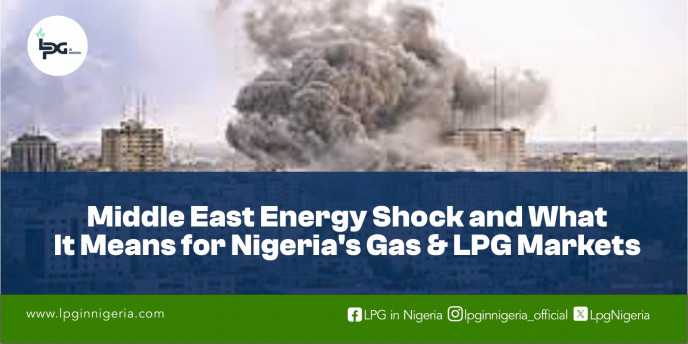
Middle East Energy Shock And What It Means For Nigeria’s Gas & LPG Markets
Middle East Energy Shock And What It Means For Nigeria’s Gas & LPG Markets

In early March 2026, global energy markets received a jolt that reverberated around the world, from European gas hubs to African energy importers and Nigeria finds itself watching closely. A combination of geopolitical conflict and production disruptions has caused natural gas prices to spike, key facilities to shut down and traders to rethink assumptions about supply reliability. These developments matter not just for distant markets in Europe and Asia, but also for Nigeria’s economy, its gas sector, and the emerging LPG market. The immediate catalyst was a series of drone attacks and escalating military tensions in the Middle East that hit critical energy infrastructure. One of the most serious impacts was the precautionary shutdown of Saudi Arabia’s massive Ras Tanura refinery, a facility handling around 550,000 barrels per day, after a reported drone strike sparked a fire and halted operations. This facility is not just important for oil processing; it sits on a core export and refining hub for the region’s energy flows.
Simultaneously, Qatar halted Liquefied Natural Gas (LNG) production at its sprawling Ras Laffan complex, one of the world’s largest LNG facilities, after drone attacks hit its gas infrastructure. Qatar’s LNG output accounts for an estimated 20% of global seaborne supply, and its suspension sent shockwaves through global gas markets. Natural gas benchmarks across Europe spiked by as much as 45–50% in response to the interruption.
These dual disruptions, one in oil refining and the other in LNG production highlight how geopolitical instability in a single region can impact global energy economics. And while Nigeria is not physically part of the Gulf, the country could still feel meaningful effects.
What This Means for Nigeria’s Economy
Nigeria is deeply interconnected with global oil and gas markets. Energy exports form a core component of foreign exchange earnings, government revenues, and fiscal planning. Although Nigeria produces crude oil domestically and has significant gas reserves, it also participates in global markets through LNG exports and international pricing benchmarks.
When prices surge due to supply risk, Nigeria experiences both positive and negative economic pressures:
1. Exchange Rate and Revenue Windfall (Short Term)
In the immediate term, higher oil prices often paired with higher gas and LNG pricing can improve export revenues. Higher crude prices translate into better earnings for Nigerian producers and potentially increased government receipts, which might temporarily strengthen fiscal balance sheets and foreign exchange flows.
2. Inflationary Pressures (Short to Medium Term)
Global energy price spikes often feed directly into the cost of fuel imports, electricity generation, and transportation. For an economy already grappling with inflation, this can worsen living costs, put pressure on fuel subsidies, and elevate input costs for industry.
3. Market Volatility and Budget Planning Risk
The unpredictability of conflict-driven price movements complicates fiscal planning. Government and private sector investment decisions hinge on price stability; sudden volatility forces constant recalibration of budgets and investment returns.
Impact on Natural Gas in Nigeria
While Nigeria’s domestic gas production and LNG export sectors are not directly tied to Middle Eastern LNG infrastructure, the global nature of gas trading means disruption elsewhere ripples everywhere.
The spike in European gas prices reflects a global market reacting to reduced supplies and increased risk premiums.
For Nigeria, this means:
1. Potential Opportunity for Export Pricing
If global demand for LNG remains elevated or shifts due to supply gaps, Nigerian producers could see increased demand or better pricing for their own LNG exports, particularly for markets in Europe and Asia hungry for supply alternatives.
2. Domestic Market Pressure
The international gas price surge can increase the cost of gas-linked contracts, particularly those indexed to global benchmarks. Even if Nigeria is not importing gas, domestic contracts (especially for power plants or industrial offtakers with international pricing structures) could see cost increases.
3. Investment Headwinds
Heightened geopolitical risk often causes capital to seek safer returns. Infrastructure and upstream gas investment flows could slow if project financiers perceive elevated risk around energy supply stability and regional geopolitics.
Effects on Nigeria’s LPG Market
Liquefied Petroleum Gas (LPG) is often considered part of the broader “gas” umbrella, but its market dynamics differ from LNG and piped natural gas. Still, there are important possible effects:
1. Price Transmission Through Global Gas Markets
While LPG pricing in Nigeria is largely domestically influenced by supply chain logistics, foreign exchange rates, and local demand, global gas and energy trends can indirectly influence pricing. If international prices remain high, the cost of importing LPG or LPG feedstock may rise, contributing to higher retail prices locally.
2. Increased Household and Industrial Demand for Alternatives
Electricity instability linked to gas supply or pricing stress often pushes households and small businesses toward alternative energy solutions, including LPG, where available. If natural gas becomes more expensive or if electricity shortages worsen, demand for LPG for cooking, heating, or even small-scale power generation could increase.
This would be particularly impactful in Nigeria, where LPG adoption is part of national energy transition policies. Increased LPG demand could improve economies of scale, but only if supply chain infrastructure keeps pace.
3. Investment in Storage and Infrastructure
Periods of global disruption reveal the importance of resilience and storage. Nigeria’s LPG and natural gas sectors could attract increased focus on strategic storage infrastructure both to shield the domestic market from volatility and to position the country as a more reliable exporter regionally.
What Medium and Small Business Owners Should Consider
For medium and small enterprises operating in energy-related sectors, whether LPG distribution, transport logistics, or small-scale manufacturing, the current energy stock holds several leassons:
1. Price Risk Management Matters
Business owners must reconsider reliance on fixed-cost pricing models. If upstream prices become volatile due to geopolitical factors, locking in supply contracts, hedging price risk where possible, and diversifying suppliers become essential.
2. Diversification of Energy Use
Enterprises that depend on grid electricity or a single energy source may find themselves exposed to volatility. Integrating LPG as part of a diversified energy strategy, especially for cooking, heating, or equipment operation, can build resilience.
3. Cash Flow and Cost Planning
Higher energy costs ripple through operational expenses. Businesses must build contingency buffers, revisit pricing strategies, and plan more conservatively for utilities and fuel costs.
A Nigerian Perspective
Global energy markets are rarely static. They are deeply political, and disruption in one region can quickly turn into a risk or opportunity for another.
For Nigeria, the current energy shock highlights both vulnerability and potential. The country’s rich gas reserves, strategic export capacity, and growing domestic LPG market position it for leadership, but only if infrastructure, pricing mechanisms, and risk management systems are sharpened.
The Middle East disruption reminds us that energy security is as much about geostrategy as it is about geology. Nigeria’s future in gas and LPG will depend on how it navigates not just domestic policy, but global market uncertainty.
Sources and References
Share on Social Media:
Are you setting up, or do you need LPG information? Get started with our LPG and CNG Webinars!
Do you need LPG Depot Prices and Mont Belvieu Prices Data Sheet (2019 till date)? Get Access here!
You May Also Like



0 Comment.