


- 1305
- 0
Sharing Ideas and Updates on LPG in Nigeria and related information to enable effective collaboration within the LPG Value Chain


Average 12.5kg LPG Prices In Nigeria (2025): A Year In Review
Average 12.5kg LPG Prices In Nigeria (2025): A Year In Review

Liquefied Petroleum Gas (LPG) prices in Nigeria remained highly dynamic throughout 2025, reflecting broader pressures from supply constraints, exchange-rate volatility, infrastructure limitations, and policy shifts within the energy sector. Tracking the average retail price of a 12.5kg LPG cylinder across the year provides valuable insight into affordability trends for Nigerian households that increasingly rely on gas for clean cooking.
Price Trends Across the Year
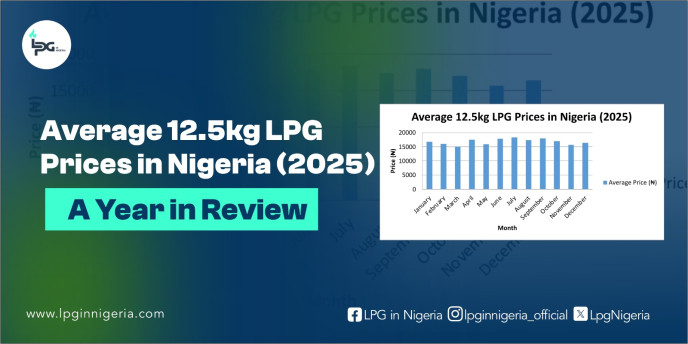
The year began with the average price of ₦16,761 in January, followed by a steady decline through February (₦15,972) and March (₦15,085). This early-year reduction offered temporary relief to consumers, largely attributed to improved supply flows and moderated demand after the festive period.
However, April marked a sharp rebound, with prices rising to ₦17,500. While May saw another dip to ₦15,856, volatility returned strongly from June onward. Prices climbed to ₦17,795 in June and peaked in July at ₦18,360, the highest average price recorded in 2025. This mid-year surge reflected a combination of logistics challenges, higher operational costs, and pressure on foreign exchange for LPG imports.
In the third quarter, prices fluctuated but remained elevated. August averaged ₦17,408, while September rose again to ₦18,020, signalling continued instability in the market. October offered mild relief at ₦17,048, before prices dropped significantly in November to ₦15,616, the second-lowest monthly average of the year.
The year closed in December with an average price of ₦16,360, indicating modest recovery but still underscoring the overall unpredictability of LPG pricing in Nigeria.
Key Takeaways
Highest average price: July 2025 (₦18,360)
Lowest average price: March 2025 (₦15,085)
Overall trend: Frequent fluctuations with no sustained price stability
Consumer impact: Household budgeting for cooking gas remained challenging throughout the year
Conclusion
The 2025 pricing pattern reinforces the need for stronger domestic LPG supply, improved storage and distribution infrastructure, and supportive policy frameworks to reduce price volatility. As Nigeria pushes for wider adoption of LPG as a clean cooking fuel, price stability will be critical to sustaining consumer confidence and long-term energy transition goals.
Share on Social Media:
Are you setting up, or do you need LPG information? Get started with our LPG and CNG Webinars!
Do you need LPG Depot Prices and Mont Belvieu Prices Data Sheet (2019 till date)? Get Access here!
You May Also Like



0 Comment.