

- 991
- 0
Sharing Ideas and Updates on LPG in Nigeria and related information to enable effective collaboration within the LPG Value Chain


Blackout Fears And Gas Reality: What Seplat’s Maintenance Means For Power And LPG In Nigeria
Blackout Fears And Gas Reality: What Seplat’s Maintenance Means For Power And LPG In Nigeria

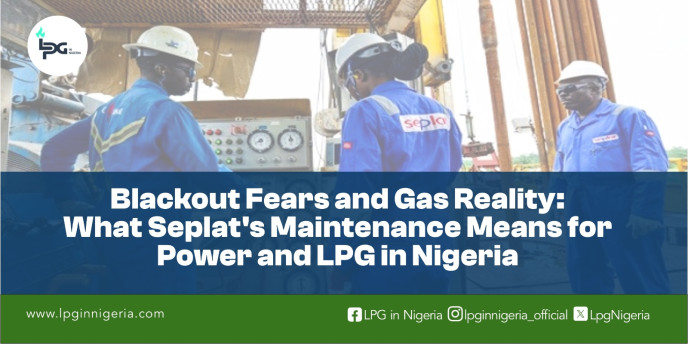
When news broke that seven major power plants across Nigeria would face gas supply constraints due to scheduled maintenance by Seplat Energy, many Nigerians did not need technical explanations to understand the likely outcome. They simply heard one thing: blackout. The notice from the Nigerian Independent System Operator warned that between February 12 and 15, 2026, gas availability to several thermal power plants would be reduced. Facilities such as Egbin, Azura, Sapele, and Transcorp were projected to experience direct impact, with others affected indirectly through network balancing effects. The estimated generation shortfall of about 934.96 megawatts represents nearly 20 percent of available grid capacity. In a country where actual generation already struggles to meet demand, that number is significant.
At one level, this is routine. Gas plants require maintenance. Infrastructure must be inspected and serviced to prevent catastrophic failure. Seplat described the shutdown as standard safety and asset integrity protocol, which in principle is responsible practice. The problem is not maintenance itself.
The problem is fragility.
Nigeria’s electricity grid remains heavily dependent on gas fired thermal plants, which account for over 70 percent of installed capacity. When gas supply into the NNPC Gas Infrastructure Company Limited pipeline network is constrained, electricity generation falls almost immediately. Even with installed capacity exceeding 13,000 megawatts, actual generation often hovers between 4,000 and 5,000 megawatts due to gas shortages, transmission bottlenecks, and other systemic challenges. A scheduled four day maintenance window should not trigger nationwide anxiety, yet it does.
For ordinary citizens, the technical language of gas balancing effects translates into darker homes, louder generators, and higher daily expenses. Businesses prepare for diesel purchases. Households anticipate fuel queues. Students brace for nights without electricity. The ripple effect is economic and psychological.
The broader question, however, is what this type of disruption means for LPG and the wider gas ecosystem.
At first glance, the maintenance primarily affects natural gas supplied to thermal power plants, not LPG distributed to households. LPG is processed, stored, and transported differently. Cooking gas cylinders in homes are not directly fed from the same immediate pipeline flow that powers grid turbines. In technical terms, a short term maintenance event on a specific upstream facility does not automatically mean that LPG supply will vanish from retail outlets. However, the gas sector in Nigeria operates as an interconnected system. When a major gas processing facility shuts down, even temporarily, balancing measures across the network can create secondary effects. One possible impact is psychological rather than physical. Public announcements of gas shortages for power generation can influence consumer perception. When people hear that gas supply is constrained, they may assume that all forms of gas are affected. This can lead to precautionary buying behavior. Retailers may experience short term spikes in demand for LPG as households attempt to hedge against blackouts by ensuring cooking fuel availability. In some cases, such demand spikes can push prices up locally, even if upstream LPG production remains stable.
Another indirect effect concerns industrial prioritization. During constrained periods, policymakers and operators often prioritize critical infrastructure and essential services. If gas balancing decisions become tight, allocation across sectors may be reviewed. While LPG for domestic use is usually safeguarded due to its social importance, extreme supply stress in the broader gas network could theoretically reduce flexibility in processing operations, especially if shared facilities are involved.
There is also a structural implication. Each time maintenance leads to significant generation shortfall, it exposes the lack of redundancy in Nigeria’s gas to power framework. Critics, including civil society advocates, argue that the country should have gas storage buffers or strategic reserves capable of sustaining power plants during scheduled shutdowns. The absence of such buffers reinforces the perception that Nigeria’s gas system, despite abundant reserves, is operationally vulnerable.
This perception can affect investment confidence across the gas value chain, including LPG infrastructure. Investors in storage terminals, bottling plants, and distribution networks evaluate systemic reliability. If the upstream gas ecosystem appears fragile, capital may demand higher risk premiums. In the long term, this can slow expansion of domestic gas infrastructure, including LPG.
On the other hand, disruptions in grid electricity can temporarily increase reliance on LPG in a different way. When blackouts intensify, households shift more activities to gas. Electric hot plates are abandoned. Gas cookers become primary tools. Small food vendors who might have used electric appliances revert fully to LPG. In this sense, grid instability can boost short term LPG consumption. The relationship between electricity and LPG in Nigeria is complex. Both rely on gas, yet they serve different consumption segments. Thermal power plants depend on high volume pipeline gas. LPG for households depends on processing, fractionation, bottling, and cylinder distribution. A maintenance window at a gas plant feeding the NGIC pipeline may reduce feedstock flow temporarily, but unless it directly affects LPG extraction units or fractionation capacity, retail cooking gas may remain largely stable.
The more critical issue is structural interdependence. Nigeria’s ambition under its gas development strategy is to deepen domestic gas utilization across power, industry, and households. That vision requires resilient infrastructure. When a single maintenance exercise can reduce available generation capacity by nearly one fifth, it signals insufficient diversification and storage within the gas network. For LPG, the long term risk is reputational linkage. If the public repeatedly associates gas with instability, whether in electricity or in viral kitchen incidents, trust in gas as a reliable backbone energy source may weaken. Energy transitions depend heavily on confidence. LPG adoption campaigns emphasize reliability, cleanliness, and efficiency. Frequent headlines about gas supply constraints in the power sector can blur that narrative, even if the underlying mechanisms differ.
Yet there is another angle. Scheduled maintenance demonstrates operational maturity. Infrastructure that is not maintained fails unpredictably. Planned downtime is preferable to an emergency collapse. If communicated transparently and executed efficiently, such maintenance can strengthen long term system reliability. For LPG stakeholders, this is important. A robust upstream gas ecosystem ultimately supports stable LPG production and supply. The four day maintenance window may pass with limited practical impact on household LPG availability. Price movements, if any, are likely to be localized and temporary. The more significant takeaway lies in what the episode reveals about planning and buffers.
Nigeria holds the largest gas reserves in Africa. Yet domestic consumption systems remain vulnerable to short term supply interruptions. Investment in storage, redundancy, and diversified supply routes would reduce both electricity and broader gas sector exposure to planned or unplanned disruptions. For LPG specifically, the incident underscores the need for continued infrastructure development. Expanding storage terminals, improving inland distribution, and strengthening supply contracts can insulate household cooking gas from upstream volatility. The more decentralized and well buffered the LPG system becomes, the less it will be influenced by shocks in the power generation segment. In the end, the blackout fears triggered by Seplat’s maintenance highlight a recurring truth. Nigeria’s energy stability is inseparable from the resilience of its gas supply chain. LPG may not experience immediate physical shortages from a short term plant shutdown, but it operates within the same national gas ecosystem. Strengthening that ecosystem benefits both grid electricity and clean cooking.
The real question is not whether maintenance should occur. It must. The question is whether Nigeria will build enough flexibility into its gas infrastructure so that routine safety exercises no longer create national anxiety. Until that happens, every scheduled shutdown will feel larger than it should, and every headline about gas constraints will ripple beyond power plants into the broader conversation about energy security and LPG reliability.
Share on Social Media:
Are you setting up, or do you need LPG information? Get started with our LPG and CNG Webinars!
Do you need LPG Depot Prices and Mont Belvieu Prices Data Sheet (2019 till date)? Get Access here!
You May Also Like




0 Comment.