


- 3768
- 2
Sharing Ideas and Updates on LPG in Nigeria and related information to enable effective collaboration within the LPG Value Chain


Cooking Gas Prices Increased By 3.5% From August To September For Nigerians
Cooking Gas Prices Increased By 3.5% From August To September For Nigerians

Retail prices of cooking gas have continued their upward trend in September 2025, with data gathered by LPG in Nigeria showing a nationwide average price of ₦18,020 per 12.5kg cylinder, representing a 3.5% increase from the August average of ₦17,408.
The figures were compiled from verified reports shared online and across our social media communities, including LPG users, retailers, and distributors in various states. Responses were collated to reflect real-time prices from major cities such as Lagos, Abuja, Port Harcourt, Enugu, and Akure.
Regional Price Overview
The survey reveals significant price variations across states.
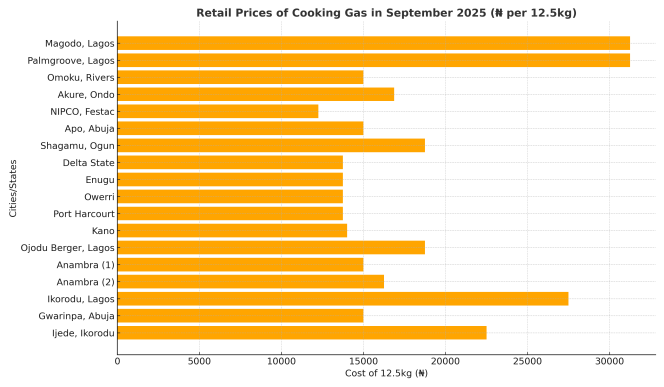
Magodo and Palmgroove, Lagos State, recorded the highest retail prices at ₦2,500 per kg (₦31,250 for 12.5kg).
Ikorodu, Lagos, followed with ₦2,200 per kg, while Ijede, another Ikorodu community, stood at ₦1,800 per kg.
In contrast, the lowest prices were observed at NIPCO, Festac, where a kilogram sold for just ₦980, amounting to ₦12,250 per 12.5kg.
Other parts of the country such as Omoku (₦15,000), Delta (₦13,750), and Kano (₦14,000) maintained moderate prices compared to the sharp spikes seen in Lagos.
Price Movement: August vs. September 2025
In August, the national average stood at ₦17,408, while the September average rose to ₦18,020, showing a ₦612 increase per 12.5kg cylinder.
This represents an approximate 3.5% month-on-month price rise, highlighting the persistent instability in LPG supply and pricing.
The jump, although modest compared to previous months, points to artificial inflation caused by ongoing supply disruptions rather than organic market forces.
Causes of the Price Surge
Two key developments have driven this latest round of price increases:
Dangote Refinery Supply Constraints:
The refinery, which currently supplies a major portion of Nigeria’s domestic LPG demand, has faced reported operational disruptions. Industry sources suggest that these interruptions have reduced available supply in the market, creating scarcity and price volatility.
PENGASSAN Strike and Industrial Disruptions:
The strike action by the Petroleum and Natural Gas Senior Staff Association of Nigeria (PENGASSAN) in late September temporarily halted gas loading and movement across key supply routes. Although the strike has been suspended, the ripple effects are still visible, as delayed distribution has inflated short-term retail prices.
These combined factors have created a temporary but impactful artificial scarcity, prompting panic buying among retailers and speculative pricing at some depots.
Market Sentiment and Consumer Impact
For consumers, especially households dependent on LPG for cooking, this increase adds further strain amid Nigeria’s high cost of living. Retailers report slower refill rates and a reduction in cylinder purchases, as many families resort to rationing gas or switching to cheaper alternatives like charcoal and firewood, a worrying trend for the country’s clean energy transition.
Industry observers have also raised concerns about price transparency and supply coordination, noting that better communication between major producers, depot operators, and marketers could mitigate such sharp fluctuations in future.
Our Position at LPG in Nigeria
At LPG in Nigeria, we believe this current wave of price volatility underscores the urgent need for a transparent and coordinated LPG supply framework. The market’s heavy reliance on one major supplier, Dangote Refinery poses a systemic risk, as any disruption has nationwide consequences.
Furthermore, while temporary scarcity and industrial action may explain the recent surge, the lack of real-time supply communication has worsened panic among consumers and traders alike.
To stabilize the market, stakeholders including producers, depot operators, and regulatory agencies must collaborate to establish a supply visibility system, where volume production, distribution schedules, and disruptions are publicly tracked.
Until then, Nigerians will continue to experience fluctuating prices, with the average cost of a 12.5kg cylinder now standing at ₦18,020, up from ₦17,408 in August, a reminder that even a short disruption can ripple through the entire LPG value chain.
Share on Social Media:
Are you setting up, or do you need LPG information? Get started with our LPG and CNG Webinars!
Do you need LPG Depot Prices and Mont Belvieu Prices Data Sheet (2019 till date)? Get Access here!
2 Comments.
-
-
Oluwabukola Jimoh
14 October 2025 - 09:51pmThe government is currently taking measures to curb the current price instability, as it is 'artificial'. We can only hope stability comes to the market soon.
Reply
-

You May Also Like



Marvelous Snowfield
14 October 2025 - 08:03amDo you think this price instability will increase during the festivities period?
Reply