


- 3041
- 2
Sharing Ideas and Updates on LPG in Nigeria and related information to enable effective collaboration within the LPG Value Chain


Dangote Refinery Reduces Cooking Gas Price Again, Sparking Relief And Optimism Across Nigeria
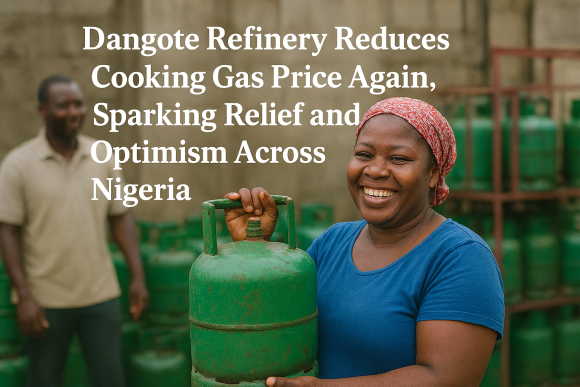
Dangote Refinery Reduces Cooking Gas Price Again, Sparking Relief And Optimism Across Nigeria

The new ex-depot price now stands at ₦760 per kilogram, a drop from ₦810 just last week. This marks the refinery’s second major price cut in less than a month, reinforcing its growing influence in making LPG more affordable for Nigerian households.
Industry observers say this bold step will provide much-needed relief for millions of Nigerians grappling with high living costs and inflation. By slashing prices, Dangote is once again positioning itself as the key player driving affordability and accessibility in the gas sector.
When compared to other major suppliers, Dangote’s price stands out for its affordability. Matrix and Ardova depots currently sell at ₦920 per kilogram, while A.Y.M Shafa and NIPCO are at ₦910 per kilogram. Stockgap Depot, one of the largest players in the market, sells for as high as ₦950 per kilogram.
This price gap ranging between ₦150 and ₦190 per kilogram underscores the refinery’s strong market influence and its growing role in stabilising energy prices across the country.
Experts in the petroleum and energy sector have described Dangote’s latest move as a deliberate market intervention aimed at reshaping pricing dynamics and discouraging arbitrary price hikes by other depot operators.
According to industry analysts, the refinery’s strategy aligns with its long-term vision of strengthening domestic supply, reducing reliance on imported LPG, and supporting the federal government’s clean energy transition agenda.
By setting a lower benchmark, Dangote may be pushing competitors to adjust their prices downward, a shift that could make LPG more accessible to ordinary Nigerians while encouraging broader adoption of clean cooking fuels.
Nigerians have responded positively to the development, with many expressing hope that the price cuts will soon reflect at retail outlets and local gas refilling stations.
If sustained, this downward trend could help stabilize the cooking gas market and drive a major shift away from firewood and charcoal, fuels that continue to dominate rural cooking practices and contribute to deforestation and health problems.
Beyond affordability, the refinery’s actions could thus have significant environmental and social benefits, advancing Nigeria’s journey toward cleaner, more sustainable household energy use.
At LPG in Nigeria, we welcome Dangote’s continued price cuts as a positive development for the industry and consumers alike. However, it is important to clarify the underlying market realities often overlooked in public discourse. While Dangote Refinery has announced a lower ex-depot price, it does not directly control depot-level pricing. The offtakers, licensed distributors who lift LPG from the refinery, set their own prices, which vary based on logistics, storage costs, and transportation margins. These independent marketers compete among themselves, creating disparities in how much end users ultimately pay.
Additionally, the landing price at other depots such as those supplied by NLNG or BRT Bonny tends to be higher due to marine transportation and handling costs. This explains why some depots, especially in inland regions, cannot instantly match Dangote’s price levels even when refinery prices drop.
Therefore, while Dangote’s reduction is a major step in the right direction, achieving true affordability and nationwide price uniformity requires a more transparent and coordinated supply framework. Stakeholders, including marketers, regulators, and policymakers must collaborate to streamline logistics, improve inland distribution efficiency, and minimize speculative pricing.
In the long run, Nigeria’s LPG market will thrive not just on refinery efficiency, but also on market transparency, infrastructure investment, and fair competition across the value chain.
Dangote’s latest price move is an encouraging sign but to make cooking gas truly accessible for all Nigerians, the entire ecosystem must evolve with it.
Share on Social Media:
Are you setting up, or do you need LPG information? Get started with our LPG and CNG Webinars!
Do you need LPG Depot Prices and Mont Belvieu Prices Data Sheet (2019 till date)? Get Access here!
2 Comments.

You May Also Like


Buté Gas
10 October 2025 - 08:48amSure enough, Dangote leads the way as to what is possible in LPG market price dynamics. The goal of public policy on energy accessibility should indeed focus on instilling transparency in pricing. But price uniformity? That may not be a necessary goal, thanks to logistics and transportation mileages across the depots and between end users.
Reply