

- 2268
- 0
Sharing Ideas and Updates on LPG in Nigeria and related information to enable effective collaboration within the LPG Value Chain


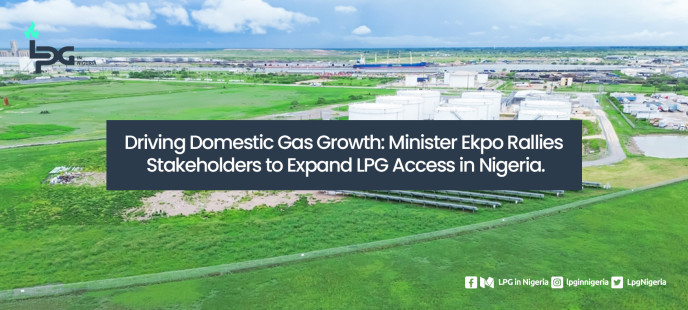
Driving Domestic Gas Growth: Minister Ekpo Rallies Stakeholders To Expand LPG Access In Nigeria
Driving Domestic Gas Growth: Minister Ekpo Rallies Stakeholders To Expand LPG Access In Nigeria

In a renewed push to strengthen Nigeria’s domestic Liquefied Petroleum Gas (LPG) sector, the Minister of State for Petroleum Resources (Gas), Mr. Ekperikpe Ekpo, has called for deeper collaboration among key energy players to ramp up local LPG availability and affordability.
At a series of high-level meetings held on Tuesday, Mr. Ekpo engaged the leadership of Nigeria Liquefied Natural Gas (NLNG) Limited, the Nigerian National Petroleum Company (NNPC) Limited, WAGL Energy Limited, and Nexaspring Gas Limited. The purpose? To fast-track investments, partnerships, and infrastructural support that will catalyse LPG penetration across the country.
The closed-door sessions included top stakeholders such as the Executive Vice President for Gas and New Energy at NNPC, Mr. Lekan Ogunleye; NLNG’s Managing Director, Mr. Philip Mshelbila; Deputy MD, Mr. Olakunle Osobu; WAGL’s MD, Mr. Mohammed Sani Bello; and Nexaspring Gas’ MD, Mr. Bowale Jolaso.
Strategic Moves to Strengthen Domestic Supply
Two of the indigenous companies, WAGL and Nexaspring Gas are now planning significant investments in LPG storage and supply infrastructure, strategically located near the NLNG plant in Bonny, Rivers State. This location will offer a direct line to NLNG’s gas output, improving logistics and easing product movement into the local market.
The completion of the NLNG-constructed Bonny-Bodo Road is expected to be a game-changer, facilitating smoother and faster transportation of LPG into other parts of the country and reducing bottlenecks associated with long-haul delivery.
Nigeria’s Gas Potential: A Sleeping Giant?
Nigeria holds an estimated 209–209.3 trillion cubic feet (TCF) of proven natural gas reserves, making it the largest in Africa and ninth globally. The government is aiming for 210 TCF by the end of 2025 and 220 TCF by 2030. Yet, actual utilisation lags far behind this potential.
In 2024, the country produced approximately 2.5 billion million standard cubic feet (mmscf) of gas, with 92% utilised (including exports) and 8% flared, a noticeable improvement from past years. However, total earnings from gas hovered around ₦8.6 trillion based on a $2.42/MMBTU benchmark, and only 2.31 TCF of gas was actually monetised.
A Long Way to Go Under the “Decade of Gas” Initiative
Despite these gains, the numbers still fall short of the ambitious “Decade of Gas” target of producing 12 billion cubic feet (BCF) per day by 2030. Minister Ekpo underscored this gap and encouraged NNPC and NLNG to work closely with Nigerian firms like WAGL and Nexaspring Gas to fast-track delivery and bolster market confidence.
Such collaboration, he said, is vital to ensuring LPG becomes more available and affordable for Nigerians, particularly in rural and underserved areas where firewood and kerosene remain the dominant cooking fuels.
Supporting the “From Gas to Prosperity” Agenda
At the heart of this strategy is President Bola Tinubu’s “From Gas to Prosperity: Renewed Hope Agenda,” which positions natural gas as the fuel of economic rejuvenation for the country. By aligning public and private sector efforts, the government aims to turn Nigeria’s gas wealth into tangible outcomes for its people, lower energy costs, reduced environmental degradation, job creation, and healthier communities.
Final Thoughts
The meetings convened by Minister Ekpo mark a significant turning point in Nigeria’s domestic gas story. With strategic infrastructure, private sector investments, and political will now aligned, the roadmap to an LPG-powered Nigeria is clearer than ever.
At LPG in Nigeria, we continue to monitor these developments, engage stakeholders, and provide data-driven insights to help consumers and investors navigate the evolving LPG landscape.
Follow us on WhatsApp, Facebook, and X (Twitter) for updates, analysis, and pricing trends across the LPG value chain. Together, let’s power Nigeria into a cleaner, gas-driven future.
Share on Social Media:
Are you setting up, or do you need LPG information? Get started with our LPG and CNG Webinars!
Do you need LPG Depot Prices and Mont Belvieu Prices Data Sheet (2019 till date)? Get Access here!
You May Also Like

0 Comment.