

- 5158
- 2
Sharing Ideas and Updates on LPG in Nigeria and related information to enable effective collaboration within the LPG Value Chain


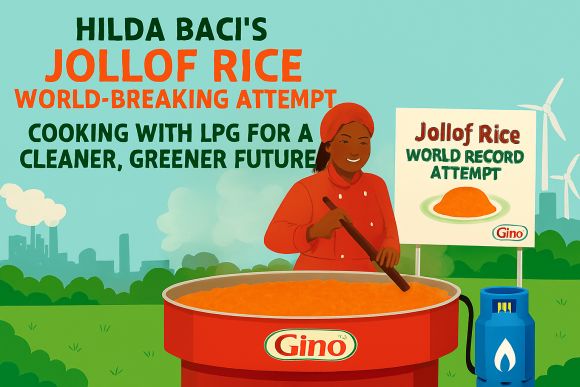
Hilda Baci’s Jollof Rice World-Breaking Attempt: Cooking With LPG For A Cleaner, Greener Future
Hilda Baci’s Jollof Rice World-Breaking Attempt: Cooking With LPG For A Cleaner, Greener Future

Nigeria’s beloved culinary star, Hilda Baci, is once again capturing global attention with her ambitious attempt to set a new world record, this time centered on preparing the largest batch of Jollof rice, a dish that carries immense cultural pride across West Africa. However, beyond the excitement of breaking records, this event also carries an important message about sustainability, clean cooking, and the future of energy in Nigeria.
What makes this attempt stand out is not only the sheer scale of food preparation but also the choice of energy: Liquefied Petroleum Gas (LPG). By cooking with LPG, Hilda Baci is highlighting the importance of clean, efficient, and environmentally friendly energy sources in tackling Nigeria’s cooking fuel challenges.
Why LPG Matters in the Record Attempt
Cooking at the scale Hilda is undertaking requires not just skill and stamina but also reliable and efficient energy. LPG, often referred to as cooking gas, provides several advantages over traditional fuels such as firewood, charcoal, or kerosene:
Efficiency: LPG burns faster and more evenly, allowing precise control over heat, essential when cooking massive quantities of Jollof rice.
Health Benefits: Unlike firewood or kerosene, LPG produces minimal smoke and harmful emissions, protecting cooks and bystanders from indoor air pollution.
Environmental Gains: Switching to LPG reduces deforestation caused by firewood demand and lowers greenhouse gas emissions compared to traditional fuels.
By showcasing LPG in such a high-profile event, Hilda is helping raise awareness about clean cooking solutions for millions of Nigerian households still relying on polluting fuels.
Kike AI: Measuring LPG Usage and Carbon Savings
In partnership with Kike AI (also a partner of LPG in Nigeria), this record attempt is taking a futuristic turn. Kike AI will be responsible for measuring the amount of LPG consumed during the cooking process while also calculating the carbon savings achieved compared to more harmful alternatives.
This technological integration underscores the role of data and innovation in the clean energy transition. With Kike AI’s real-time monitoring, the event goes beyond entertainment to deliver measurable insights on sustainability. The results will demonstrate how large-scale cooking with LPG can significantly reduce environmental impact, an example that can inspire households, businesses, and institutions across Nigeria.
The Broader Significance: Jollof, Identity, and Sustainability
Jollof rice is more than just food, it is a symbol of cultural pride, identity, and even friendly rivalry across West Africa. By attempting this feat, Hilda Baci is putting Nigerian cuisine firmly on the world map.
At the same time, the event creates a platform to discuss bigger issues:
Access to clean cooking fuels for the estimated 70% of Nigerian households still dependent on charcoal, firewood, and kerosene.
The need for investment in LPG infrastructure, such as cylinders, refilling plants, and distribution networks, to make clean cooking affordable and accessible nationwide.
Climate action, as Nigeria works towards reducing carbon emissions while improving health and livelihoods.
A Record Attempt with a Purpose
While the world will be watching to see if Hilda Baci secures her place in the record books once again, the real victory lies in the message: clean cooking is possible, practical, and powerful. By choosing LPG and pairing it with advanced monitoring tools like Kike AI, Hilda’s attempt is not just about breaking a record—it’s about breaking barriers to cleaner energy adoption in Nigeria.
This event demonstrates that food, culture, and sustainability can intersect in impactful ways. Hilda Baci’s Jollof rice challenge is more than a culinary feat—it’s a call for Nigerians and Africans at large to embrace cleaner fuels, smarter technologies, and a healthier, greener future.
Share on Social Media:
Are you setting up, or do you need LPG information? Get started with our LPG and CNG Webinars!
Do you need LPG Depot Prices and Mont Belvieu Prices Data Sheet (2019 till date)? Get Access here!
2 Comments.

You May Also Like




Shalom
13 September 2025 - 11:46pmGreat Article
Reply