

- 3183
- 0
Sharing Ideas and Updates on LPG in Nigeria and related information to enable effective collaboration within the LPG Value Chain


Kenya’s LPG Expansion: A Model For Africa And A Wake-Up Call For Nigeria
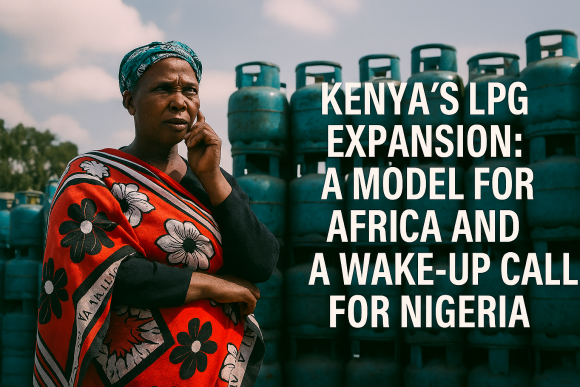
Kenya’s LPG Expansion: A Model For Africa And A Wake-Up Call For Nigeria

Kenya’s steady progress in expanding its Liquefied Petroleum Gas (LPG) market offers both inspiration and reflection for the rest of Africa, especially Nigeria, where clean energy adoption remains inconsistent and vulnerable to market volatility.
A recent interview with Elizabeth Muchiri, East Africa Director of the Global LPG Partnership (GLPGP), reveals that Kenya’s LPG sector has made meaningful strides in clean cooking access, innovative distribution models, and supportive fiscal policies. Yet, the country still faces challenges around pricing, illegal refilling, and supply chain stability issues that mirror Nigeria’s current LPG realities, albeit on a larger scale.
Kenya’s Steady Rise in LPG Adoption
Kenya’s annual LPG demand rose from 326,000 tonnes in 2020 to 415,000 tonnes in 2024, and per capita consumption now stands at 7kg per person per year, with the government targeting 15kg by 2028. Nairobi alone consumes nearly 60% of total national volumes, highlighting how adoption remains urban-centric, a pattern also visible in Nigeria, where Lagos, Abuja, and Port Harcourt dominate usage.
Muchiri credits this progress to policy consistency and private-sector dynamism. The removal of VAT on LPG, state-led cylinder distribution to low-income households, and pay-as-you-cook initiatives have expanded affordability and access. Additionally, Kenya’s autogas (LPG-for-vehicles) sector is booming, with an estimated 15,000 vehicles now running on LPG, an innovation Nigeria has yet to meaningfully scale, despite its potential to reduce petrol dependence.
Challenges That Mirror Nigeria’s Struggles
Kenya’s LPG journey, however, is not without its pitfalls. The collapse of the mandatory cylinder exchange pool, once a model for convenience, led to widespread illegal refilling, safety risks, and loss of investment confidence. Without a unified and enforceable system, marketers became hesitant to expand cylinder ownership, knowing others might illegally refill their assets.
This scenario bears an uncanny resemblance to Nigeria’s ongoing cylinder recirculation debate, which has struggled to move from policy to practice. Many Nigerian LPG marketers echo the same concerns Kenyan players now face: poor regulation, weak enforcement, and unsafe refilling practices that deter investment and jeopardize consumer safety.
Pricing is another shared pain point. In Kenya, retail prices fluctuate between KSh190 and KSh230 per kilogram, while in Nigeria, prices vary widely from ₦1,200/kg to over ₦2,500/kg, depending on region and supply disruptions. Both countries operate without strict price controls, leaving markets vulnerable to speculation, logistics costs, and inconsistent supply.
The Reality in Nigeria: Policy Paralysis and Market Dependence
For Nigeria, Kenya’s experience underscores what deliberate policy and consistency can achieve and what happens when they are absent. Despite being Africa’s largest gas producer, Nigeria’s LPG sector continues to struggle with infrastructure deficits, price volatility, and policy inconsistency.
Over the past months, industrial disputes involving PENGASSAN, temporary refinery shutdowns, and supply gaps from the Dangote Refinery have exposed just how fragile Nigeria’s LPG ecosystem is. Average retail prices for a 12.5kg cylinder rose from ₦17,408 in August to ₦18,020 in September 2025, reflecting not organic inflation but artificial scarcity driven by supply disruptions and dependence on a single major producer.
Unlike Kenya, which has successfully eliminated VAT and introduced targeted consumer incentives, Nigeria still lacks a coherent framework that supports affordability and encourages widespread adoption, especially in rural areas.
Learning from Kenya: What Nigeria Must Do
Kenya’s market shows that LPG expansion thrives on three key pillars: fiscal consistency, regulatory enforcement, and private-sector trust. The country’s decision to remove VAT permanently and support low-income access programs demonstrates a government willing to see LPG as a public good, not just a commodity.
For Nigeria, similar stability is urgently needed. To achieve true market growth and inclusivity, the country must:
Revisit its LPG fiscal policies to eliminate sudden tax changes that distort pricing.
Strengthen enforcement to end illegal refilling and promote the cylinder recirculation model.
Support domestic production by ensuring stable operations at NLNG and Dangote Refinery, while diversifying supply sources.
Expand rural access through smaller cylinder packages and mobile distribution networks.
Encourage autogas adoption, creating a parallel market that reduces petrol dependence and promotes cleaner transport.
LPG in Nigeria’s Perspective
At LPG in Nigeria, we believe Kenya’s experience is both a lesson and a challenge. While Kenya’s per capita consumption remains modest compared to its potential, its government’s policy clarity and collaboration with private players have laid a sustainable foundation. Nigeria, on the other hand, risks falling behind not for lack of capacity, but for lack of coordination and transparency.
If Nigeria truly aims to lead Africa’s clean cooking revolution, it must build trust in its LPG value chain, stabilize policies, and invest in infrastructure that guarantees supply continuity. The country’s vast gas reserves should translate to domestic energy security, not recurrent scarcity and fluctuating prices.
The future of LPG in Africa is being shaped right now. Kenya is proving that with consistent policy, innovation, and private-sector inclusion, clean cooking can become a national reality. For Nigeria, the time to move from ambition to execution is now, before we lose our place as Africa’s true energy leader.
Source: Argus Media
Share on Social Media:
Are you setting up, or do you need LPG information? Get started with our LPG and CNG Webinars!
Do you need LPG Depot Prices and Mont Belvieu Prices Data Sheet (2019 till date)? Get Access here!
You May Also Like


0 Comment.