- 2104
- 0
Sharing Ideas and Updates on LPG in Nigeria and related information to enable effective collaboration within the LPG Value Chain


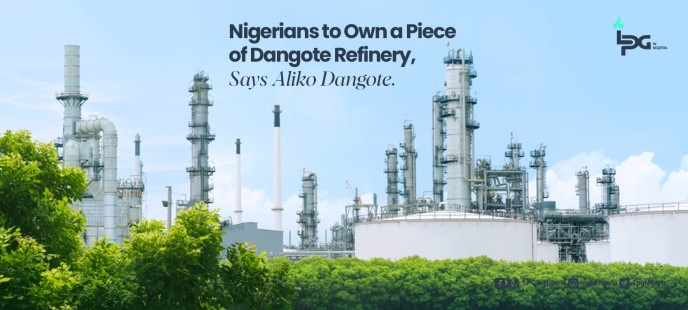
Nigerians To Own A Piece Of Dangote Refinery, Says Aliko Dangote
Nigerians To Own A Piece Of Dangote Refinery, Says Aliko Dangote

Africa’s richest man, Aliko Dangote, has announced a transformative step for Nigeria’s energy sector: the forthcoming public listing of the Dangote Refinery. This move will allow Nigerians to own shares in the multi-billion-dollar facility, a decision aimed at expanding local participation in the oil and gas industry and deepening economic inclusion. Speaking at the Global Commodity Insights Conference on West African Refined Fuel Markets in Abuja, co-hosted by the Nigerian Midstream and Downstream Petroleum Regulatory Authority (NMDPRA) and S&P Global Insights, Dangote revealed that plans are already underway to float the refinery on the Nigerian Stock Exchange. He stated that the refinery would soon be listed, giving every Nigerian the opportunity to become a shareholder and part-owner of what is arguably one of the most ambitious industrial projects on the continent.
Dangote’s announcement aligns with his broader vision that Africa should refine all of the petroleum products it consumes on its own soil. His ambition is to create an integrated energy system that not only meets the needs of the continent but does so through local production, job creation, and value retention. Part of this vision also involves promoting clean energy, particularly through the large-scale production of Liquefied Petroleum Gas (LPG). According to Dangote, the refinery currently produces 2,500 tons of LPG daily, and the company is working actively to encourage greater adoption of LPG as a cleaner, more sustainable cooking fuel for Nigerian households. This effort is in line with the broader push to reduce dependence on firewood and kerosene and to promote cleaner energy alternatives across Africa.
However, the road has not been without criticism. Some stakeholders in the downstream petroleum sector have expressed concerns about the refinery’s current mode of operation. Specifically, there have been complaints about the use of foreign, particularly Angolan, vessels for transporting crude oil and refined products, effectively bypassing indigenous maritime operators. Additionally, smaller petroleum marketers have raised issues with the refinery’s sales methods, arguing that they do not favour flexible, coastal distribution networks on which many local players depend. Olufemi Adewole, the Executive Secretary of the Depot and Petroleum Products Marketers Association of Nigeria (DAPPMAN), contended that the sales structure does not serve the interest of small-scale marketers.
In response, Dangote firmly defended the refinery’s operations and addressed accusations of monopolistic behaviour. He criticised wealthy Nigerians who invest their wealth abroad instead of contributing meaningfully to the local economy. According to him, the tendency to criticise local initiatives while investing overseas has stifled Nigeria’s growth and industrial development. He emphasised that his group has chosen to bet on Nigeria and will continue to do so, even as it faces resistance. Dangote also warned against the dangers of dumping substandard petroleum products in Nigeria, a practice that has previously devastated local manufacturing sectors, including textiles.
While addressing the issue of competition, Dangote made it clear that other investors should also be encouraged to build refineries. He noted that it is the role of the government and the NMDPRA to create an enabling environment where multiple players can contribute to the growth of the local refining sector. He reiterated that a monopoly should not be the issue if others are ready to invest and compete fairly in the market. The decision to list the refinery signals a major shift toward transparency, inclusivity, and public ownership in Nigeria’s oil industry. It also reinforces the refinery’s role not just as a private venture but as a national asset with the potential to alter the economic landscape of Nigeria and Africa. With increased LPG production, potential public ownership, and a firm stance on local industrialisation, Dangote is not just refining oil, he is refining the possibilities for energy access, economic empowerment, and national pride.
Source: Business Insider
Share on Social Media:
Are you setting up, or do you need LPG information? Get started with our LPG and CNG Webinars!
Do you need LPG Depot Prices and Mont Belvieu Prices Data Sheet (2019 till date)? Get Access here!
You May Also Like

0 Comment.