

- 4551
- 1
Sharing Ideas and Updates on LPG in Nigeria and related information to enable effective collaboration within the LPG Value Chain


Nigeria’s $60 Billion Energy Gamble: Can NNPC Deliver?
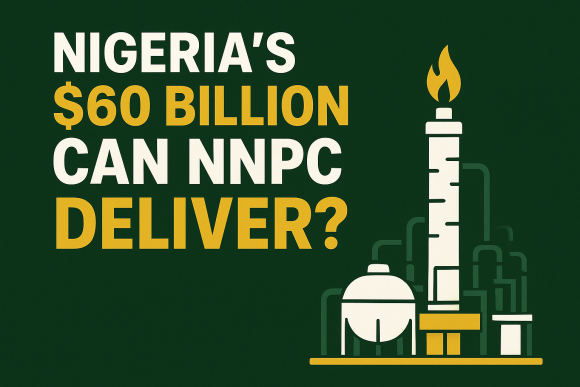
Nigeria’s $60 Billion Energy Gamble: Can NNPC Deliver?

Nigeria has always been described as a land of energy paradoxes. It is blessed with some of the largest oil and gas reserves in Africa, yet it imports most of its refined petroleum products. For decades, this contradiction has haunted the nation’s economy, draining foreign exchange and leaving citizens vulnerable to rising fuel costs. But now, the Nigerian National Petroleum Company Limited (NNPC Ltd) is attempting to rewrite that story with one of the boldest declarations in recent memory: it needs at least $60 billion in new investment to expand the country’s refining and gas production capacity.
The ambition is staggering. According to Group CEO Bayo Ojulari, NNPC’s goal is to increase domestic refining by 500,000 barrels per day by 2030, while also ramping up crude oil production to three million barrels per day and gas output to at least 20 billion cubic feet per day. These numbers are not just statistics; they represent a promise that Nigeria can finally harness its abundant resources to meet its own energy needs and fuel economic growth.
But is this dream realistic?
On paper, the plan looks like a game changer. NNPC is betting heavily on the Ajaokuta–Kaduna–Kano (AKK) gas pipeline, which, if completed, could transform the country’s energy landscape by powering industries, fueling homes with compressed natural gas (CNG), and creating new industrial hubs. There are also plans to extend the West African Gas Pipeline all the way to Morocco, opening regional markets and positioning Nigeria as a continental energy supplier.
At the same time, this investment drive is meant to tackle one of Nigeria’s biggest embarrassments: its underperforming state-owned refineries. For decades, billions of dollars have been spent on “turnaround maintenance” with little to show for it. The result? The country still depends on imports to meet daily fuel demand, even as crude oil continues to leave its shores. By 2030, if NNPC’s vision holds true, those days might finally be over.
Still, Nigerians have reason to be skeptical. Similar promises have been made in the past, often collapsing under the weight of poor execution, corruption, and shifting political priorities. Can NNPC truly attract and manage the $60 billion it says is needed? And just as important, will those funds be spent wisely and transparently, or will they vanish into the same black hole that has consumed countless energy-sector projects before?
The good news is that there are signs of progress. The AKK pipeline, for example, recently achieved a milestone with its successful crossing of the River Niger, a feat that brings it closer to its expected completion in 2025. The passage of the Petroleum Industry Act (PIA) in 2021 has also given NNPC a new commercial structure, more autonomy, and a clearer mandate to run as a profit-driven company rather than a government bureaucracy. In just two years, reforms under the PIA have helped attract over $16 billion in fresh investments, proving that investors are beginning to take Nigeria’s energy sector seriously again.
At the heart of these reforms is Bayo Ojulari himself, a petroleum engineer with decades of experience in the private sector. His leadership is being closely watched, not just for the technical expertise he brings, but also for his ability to enforce transparency and discipline in a company long criticized for inefficiency.
The stakes could not be higher. If NNPC succeeds, Nigeria stands to benefit in multiple ways.
Domestic refining would mean less reliance on imported petrol and diesel, saving billions in foreign exchange. Expanded gas production could power industries, create jobs, and boost electricity supply in a country where millions still live in darkness. And beyond the borders, Nigeria could emerge as a key supplier of gas to West Africa and beyond, strengthening its geopolitical influence.
But failure would be equally costly. If the $60 billion dream collapses, Nigeria could find itself even deeper in debt, still importing fuel while watching other African countries race ahead in energy independence.
So, as Nigerians watch this new chapter unfold, they are left with pressing questions. Will NNPC deliver on its promises this time? Can Nigeria finally break free from the vicious cycle of resource wealth and fuel poverty? Or will this bold vision become another missed opportunity?
Only time will tell. But one thing is clear: the next few years will determine whether Nigeria cements its place as Africa’s true energy giant or remains stuck in the paradox that has defined its past.
If you were asked today: would you bet on NNPC to deliver Nigeria’s energy future?
Share on Social Media:
Are you setting up, or do you need LPG information? Get started with our LPG and CNG Webinars!
Do you need LPG Depot Prices and Mont Belvieu Prices Data Sheet (2019 till date)? Get Access here!
1 Comment.

You May Also Like

kelvin
18 December 2025 - 02:10pmHello,
If you are into crude oil and gas business and you are looking for buyers or sellers to buy or sell your crude oil products, there are so many company platform this days like www. virtacome com that can enable you to connect with so many crude oil products international buyers and sellers worldwide. This company platform is where so many crude oil products dealers from different part of the world connect with each other to buy the crude oil products they want to buy or sell the crude oil products they want to sell. I use this company platform to connect with different crude oil dealers from different countries in the world. You can visit and register with the company website here www virtacome com to connect you with different crude oil dealers in the world to enable you to sell your crude oil products or buy your crude oil products with each other.
Reply