

- 3269
- 0
Sharing Ideas and Updates on LPG in Nigeria and related information to enable effective collaboration within the LPG Value Chain


Nigeria’s Energy Experts Urge Bold Action: Expand LPG Use, Deploy Smart Tech, And Tap Carbon Markets To Meet 2030 Targets
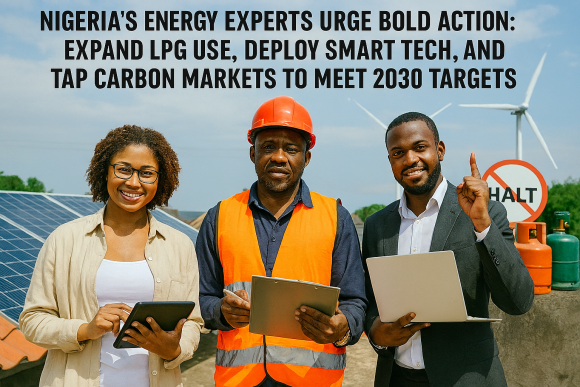
Nigeria’s Energy Experts Urge Bold Action: Expand LPG Use, Deploy Smart Tech, And Tap Carbon Markets To Meet 2030 Targets

At the 2025 National LPG Conference & Exhibition hosted by the Nigerian Association of Liquefied Petroleum Gas Marketers (NALPGAM) in Lagos, industry leaders and innovators converged to chart a bold new course for Nigeria’s energy future. Themed “Technology & Innovation in LPG: Improving Efficiency, Safety and Performance,” the panel session spotlighted a transformative vision: expanding LPG use beyond kitchens to power industries, homes, and livelihoods while leveraging carbon credits to make it affordable and scalable.
From Cooking Fuel to Economic Catalyst
Engineer Emeka Iheme, Managing Director of Gasavant Africa, challenged the status quo by urging stakeholders to rethink LPG as more than just a cooking fuel. “If we stop seeing LPG as only a cooking fuel and start integrating it into industrial boilers, generators, and even logistics fleets, the transformation will follow,” he said.
Iheme emphasized that Nigeria’s goal of reaching 5 million metric tonnes of domestic LPG consumption by 2030 demands a mindset shift. He called for:
• Industrial integration of LPG in manufacturing and power generation.
• Smart safety tools like leak detectors and pressure monitors to build public trust.
• Real estate collaboration, embedding LPG infrastructure into new developments.
• IoT-enabled systems for tracking usage and ensuring compliance.
He also advocated for stricter regulation and accreditation of installers to ensure safety and reliability across the value chain.
Innovation Meets Inclusion: Okoduwa’s Carbon Credit Model
Godwin Okoduwa, Country Director of Carbon Credit Network Africa (CCNA), unveiled a game-changing solution: the Kike Monitoring, Reporting and Validation (KMRV) tool. This carbon credit-backed technology aims to deploy 10 million smart LPG cylinders to 10 million homes without upfront costs.
Here’s how it works:
• Interest-free loans for LPG cylinders, accessible via payroll-linked identity verification.
• Carbon savings of 2.5–3 tonnes of CO₂ per household annually, tradable for credit.
• Smart features like leak shut-off, refill alerts, and WhatsApp ordering.
• Retail kiosks replace large plants, simplifying distribution for marketers.
Okoduwa’s model, previously piloted manually with Eko Gas, now runs on a tokenized digital ecosystem. It not only reduces LPG costs through carbon financing but also delivers social impact, protecting women, keeping girls in school, and improving public health.
The Road Ahead
The experts agree: Nigeria’s LPG expansion is not just an energy strategy—it’s a development imperative. By embracing innovation, harnessing carbon credits, and building inclusive systems, the country can unlock:
• Cleaner energy for homes and industries.
• Economic opportunities for local manufacturers and marketers.
• Health and education benefits for millions of families.
As Okoduwa aptly put it, “LPG adoption goes beyond monetary value. It’s about dignity, safety, and progress.”
Share on Social Media:
Are you setting up, or do you need LPG information? Get started with our LPG and CNG Webinars!
Do you need LPG Depot Prices and Mont Belvieu Prices Data Sheet (2019 till date)? Get Access here!
You May Also Like


0 Comment.