
- 2542
- 0
Sharing Ideas and Updates on LPG in Nigeria and related information to enable effective collaboration within the LPG Value Chain


NNPCL–NLNG: A Strategic Reset For Nigeria’s Gas Future
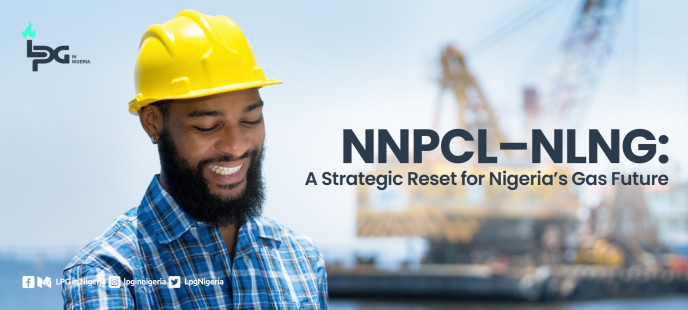
NNPCL–NLNG: A Strategic Reset For Nigeria’s Gas Future

The visit of the Nigerian National Petroleum Company Limited (NNPCL) Group CEO, Engr. Bayo Ojulari, to Nigeria LNG’s Bonny Island complex and his talks with NLNG’s Managing Director, Dr. Philip Mshelbila, signal more than a courtesy call. It is a public acknowledgement that Nigeria’s gas ambition, which powers homes and industries, earns foreign exchange, supplies LPG to kitchens, and positions the country for a lower-carbon future, now hinges on deliberate, coordinated investment and a unified execution plan.
At the heart of their conversation is a simple but urgent thesis: stabilise gas supply, de-risk critical infrastructure, and unlock upstream investments. If pursued with intent, this three-point agenda could turn recurring shortages, price volatility, and stranded assets into a resilient, growth-ready value chain.
Why the Partnership Matters Now
Nigeria sits on a vast natural gas endowment, yet homes, factories, and power plants routinely struggle to access reliable molecules at predictable prices. A combination of under investment, project delays, pipeline bottlenecks, security risks, and foreignexchange constraints has left the system exposed. NLNG itself has faced feed gas interruptions; domestic gas markets still depend heavily on imported LPG; and industries contend with episodic supply and cost spikes.
By committing to deeper collaboration, NNPCL and NLNG are aligning shareholder interests with national priorities: guarantee feed gas, finish and maintain backbone infrastructure, and crowd in new upstream capital so that existing and new trains, processing nodes, and domestic off-takers can plan on certainty rather than hope.
From Molecule to Market: Fixing the Chain, End to End
1) Upstream assurance.
Without dependable upstream output, every downstream promise is a guess. The partners’ emphasis on “unlocking upstream investments” is therefore foundational: accelerate field developments, clear legacy commercial hurdles, standardise gas sales agreements, and shorten cycle times from discovery to first gas. The more predictable the upstream, the cheaper the capital and the cheaper the molecules downstream.
2) Midstream reliability.
Pipelines, compressor stations, metering systems, and gas processing plants need both completion and care. De-risking this layer means resolving right-of-way issues, hardening assets against vandalism, enforcing access rules, and ring-fencing operations and maintenance budgets. The goal is a network that behaves like a utility—boring, dependable, and built for availability.
3)Downstream offtake and market development.
Contractual certainty for power, industry, and LPG buyers reduces balance sheet risk across the chain. Clear domestic market obligations, transparent pricing formulas (linked to cost and quality of service), and flexible take-or-pay structures help match supply and demand while preserving bankability.
De-Risking: What It Looks Like in Practice
Commercial clarity: Bankable gas purchase agreements, standardised transportation tariffs, and dispute resolution mechanisms that unlock long tenor debt.
Security & community stewardship: Modern surveillance, rapid response, and genuine community participation that turn host communities into partners, not bystanders.
FX exposure management: Implementing hedging frameworks and naira-denominated anchors where feasible, ensuring projects aren’t undone by currency swings.
Asset integrity & emissions: Continuous integrity management and methane leak abatement, both to protect throughput and to keep Nigeria competitive in an ESG-screened capital market.
Transparent governance: The kind of operational discipline and disclosure that NLNG is widely credited for, scaled across the wider gas system.
Train 7, Plant Availability, and Investor Confidence
NLNG’s Train 7 build is emblematic of the growth story. Completing and sustaining new capacity is not just about exporting more LNG; it is about anchoring investor confidence in the wider gas economy. Plant availability, dependable feed-gas, and auditable performance can compress risk premiums for new upstream and midstream projects. That, in turn, lowers delivered costs to domestic users, power plants, factories, and households.
Energy Transition: Gas, Hydrogen Options, and Net-Zero Readiness
Ojulari’s reference to a “dynamic Gas Master Plan” and exploratory hydrogen collaborations positions gas as a pragmatic bridge in Nigeria’s transition. In the near term, displacing diesel with gas in power and industry delivers immediate emissions and cost wins. Over the medium term, blending low-carbon gases (blue hydrogen, then green) into industrial systems can future-proof assets. For NLNG and the broader system, reducing methane intensity and moving toward near-zero emissions across the gas supply chain is no longer optional; it’s a competitiveness requirement.
The LPG Connection: From Export Narrative to Domestic Impact
For households, the most tangible test of any gas agenda is cooking fuel. Nigeria’s clean cooking challenge is enormous and solvable if domestic LPG supply becomes reliable, affordable, and safely distributed. Here’s where NNPCL–NLNG collaboration can be transformational:
Feed gas stability → steady LPG output. When upstream is reliable, NLNG and other processors can plan consistent LPG allocations to the domestic market.
Coastal to inland logistics: With dependable volumes, it becomes economical to scale mini depots, refilling clusters, and rail/road bridging to the North and underserved regions.
Price transmission: Predictable cargo cadence dampens panic buying and speculative spikes. Over time, this narrows coastal–inland price gaps.
Safety & standards: Coordinated work with the regulator to enforce cylinder, plant, and transport compliance, ensuring growth doesn’t come with higher accident risk.
Simply put, a stable upstream and midstream unlock a stable LPG market, which means fewer stockouts, more cylinder adoption, and better health outcomes for families currently cooking with biomass.
What Success Could Look Like in 24 Months
Upstream FIDs and tie-ins that materially lift feed gas supply to NLNG and domestic processors.
Backbone pipelines completed and de-bottlenecked, with measurable improvements in availability and line pressure.
Train 7 is onstream and running reliably, with transparent domestic LPG allocations published on a schedule.
Domestic LPG mini depots and refilling clusters commissioned across zones, cutting inland markups and travel distance for consumers.
Power and industrial offtake stabilised, evidenced by lower forced outage rates and higher load factors in gas-fired plants.
Methane intensity and flaring metrics trending down, aligning with investor expectations and lowering financing costs.
Risks to Manage: Early and Often
Execution slippage: Missed timelines compound costs; a joint PMO (project management office) with public scorecards can keep everyone honest.
Policy drift: Price controls or opaque allocation rules can choke investment; market signals must remain credible.
Community relations: One unresolved grievance can down an asset; grievance redress and benefit sharing need teeth.
Global competition: LNG buyers have options; reliability and carbon intensity will determine Nigeria’s offtake terms and netbacks.
A Partnership with National Consequences
Mshelbila’s call for deliberate investment and Ojulari’s pledge to back NLNG’s growth and sustainability articulate a shared agenda: secure Nigeria’s gas future by solving the basics and planning beyond them. Done right, this partnership can stabilize supply, crowd in capital, lower the delivered cost of energy, grow exports, and anchor the clean cooking transition through a stronger domestic LPG ecosystem.
For once, the pathway is not theoretical. The assets exist; the market is hungry; the social and climate dividends are clear. What determines the outcome now is disciplined execution from reservoir to ring burner and the resolve to keep collaboration at the center of Nigeria’s gas story.
Share on Social Media:
Are you setting up, or do you need LPG information? Get started with our LPG and CNG Webinars!
Do you need LPG Depot Prices and Mont Belvieu Prices Data Sheet (2019 till date)? Get Access here!
You May Also Like

0 Comment.