
- 4994
- 4
Sharing Ideas and Updates on LPG in Nigeria and related information to enable effective collaboration within the LPG Value Chain


NUPENG Vs Dangote: What The Tanker Drivers’ Deal Collapse Means For Nigeria’s Fuel Sector
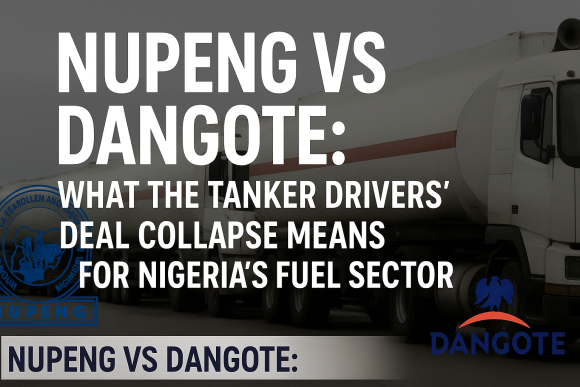
NUPENG Vs Dangote: What The Tanker Drivers’ Deal Collapse Means For Nigeria’s Fuel Sector

A promising agreement between the Nigeria Union of Petroleum and Natural Gas Workers (NUPENG) and Dangote Refinery that was supposed to protect the rights of tanker drivers has now collapsed, reopening tensions in the downstream petroleum sector. The fallout from this breakdown threatens not only industrial relations but also fuel distribution stability across Nigeria.
Background to the Dispute
Earlier, Dangote Refinery had announced a plan to use 4,000 compressed natural gas (CNG)-powered fuel trucks for direct fuel distribution to retail outlets. This move triggered concern from existing tanker drivers organized under NUPENG, who feared the initiative would displace them, especially as the new drivers reportedly would be barred from joining the union. What followed were meetings between Dangote, NUPENG, and government mediation bodies aimed at finding middle ground.
Collapse of the Deal
Despite these negotiations, the deal fell apart. NUPENG claims that Dangote’s management reaffirmed that new drivers would be recruited with conditions preventing them from union membership. The union sees this as a violation of constitutional rights, specifically workers’ freedom of association and international labour agreements to which Nigeria is bound. The collapse of the deal has stirred anger among tanker drivers who believe their livelihoods and bargaining power are under threat. The union leadership has warned that it may reinstate strike action if their demands are not met, raising the potential for disruptions in fuel delivery.
Implications for the LPG and Fuel Market
The consequences of this dispute extend beyond labour relations:
Supply chain disruption: Tanker drivers are a critical link in fuel and LPG supply chains. Any work stoppage or industrial action could delay deliveries to depots and retailers, affecting product availability.
Price volatility: Scarcity of product due to delayed deliveries often leads to higher prices at retail outlets. Consumers, already under pressure from rising energy costs, could face steeper fuel or gas prices.
Public trust and policy credibility: The government’s promotion of cleaner energy and alternative fuel systems (like CNG distribution) depends on stable partnerships and trust. A breakdown of agreements undermines confidence in these efforts.
Labour rights and industrial peace: If workers believe their rights are being ignored, it may lead to broader labour unrest, which can further destabilize the energy sector and other connected industries.
What Needs to Happen
For the stalemate to be resolved and to ensure fuel security for consumers, several steps are essential:
Reopen sincere negotiations: Dangote management, NUPENG, and relevant regulatory or labour authorities must engage again with genuine willingness to compromise especially on union membership rights for new drivers.
Clear regulatory intervention: Agencies such as the Ministry of Labour and relevant labour courts should ensure labour law and constitutionally guaranteed worker rights are upheld.
Transparency in operations: Dangote should clarify its plans for the CNG trucks, how they will be staffed, managed, and whether existing petroleum tanker drivers will be absorbed or re-trained rather than excluded.
Contingency planning: To avoid shortages, stakeholders should prepare for potential short-term disruptions by ensuring strategic fuel reserves and alternative transport arrangements.
The collapse of the deal between Dangote Refinery and NUPENG over tanker drivers is more than just a labour dispute. it’s a test of Nigeria’s capacity to balance innovation, efficiency, and worker rights in its evolving energy sector. Failure to resolve the dispute amicably could lead to supply disruptions, price hikes, and a setback for efforts to modernize fuel distribution. But with good faith, regulation, and transparency, there is still a path forward, one that protects workers while allowing energy reforms to thrive.
Share on Social Media:
Are you setting up, or do you need LPG information? Get started with our LPG and CNG Webinars!
Do you need LPG Depot Prices and Mont Belvieu Prices Data Sheet (2019 till date)? Get Access here!
4 Comments.
-
-
Ashmub
02 December 2025 - 04:18pmIn the ongoing dispute between NUPENG and Dangote, could the collapse of the tanker drivers' deal potentially trigger a domino effect, leading to a fuel crisis in Nigeria's already fragile energy sector? Discuss possible solutions and implications, considering the role of LPG in mitigating this crisis.
Reply -
Ashmub
01 December 2025 - 08:19pmIf the breakdown in negotiations between NUPENG and Dangote results in a prolonged strike, could it potentially catalyze a domino effect on the country's energy sector, causing a nationwide fuel crisis? Or, might this dispute pave the way for smaller, independent players to seize market opportunities and reshape the LPG industry in Nigeria?
Reply -
Bitcoin Profit Way
12 November 2025 - 12:13pmBitcoin Profit Way se differencie comme une plateforme d'investissement en crypto-monnaies de pointe, qui met a profit la puissance de l'intelligence artificielle pour proposer a ses membres des atouts competitifs majeurs. Son IA analyse les marches en temps reel, identifie les opportunites et execute des strategies complexes avec une precision et une vitesse inaccessibles aux traders humains, optimisant ainsi les potentiels de profit.
Reply

You May Also Like

Jamub
22 January 2026 - 12:04amMaybe you know similar resources?
Reply