


- 3208
- 0
Sharing Ideas and Updates on LPG in Nigeria and related information to enable effective collaboration within the LPG Value Chain


PENGASSAN Hampers Gas And LPG supplies.
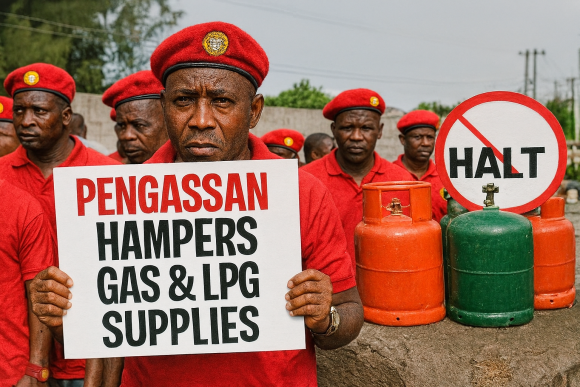
PENGASSAN Hampers Gas And LPG supplies.

The Petroleum and Natural Gas Senior Staff Association of Nigeria (PENGASSAN) has directed its members to cut off gas supply to the Dangote refinery, escalating an already tense standoff between the union and management of the $20 billion facility.
This comes after Dangote refinery confirmed the termination of some employees in what it described as a “reorganisation exercise.” PENGASSAN, however, insists that the layoffs targeted workers who were exercising their constitutional right to unionise. The union accused the company of engaging in “misinformation and propaganda” rather than addressing the grievances in a constructive manner.
As part of its response, PENGASSAN ordered crude oil supply valves to the refinery to be shut, and for loading operations to be halted. “NGIC Chairman, ensure that gas supply to the Refinery is cut off effective immediately,” read the directive signed by Lumumba Okugbawa, the union’s general secretary. PENGASSAN’s ongoing actions have stalled LPG discharge at Apapa depots, leaving Lagos in a continued state of scarcity as households and businesses grapple with dry cylinders and rising demand.
Impact on End Users
While this is largely a labour dispute between PENGASSAN and Dangote Refinery, the ripple effect will inevitably be felt by ordinary Nigerians. Dangote Refinery plays a growing role in supplying products like LPG (cooking gas), petrol, and diesel to the domestic market. Any disruption in gas supply to its operations risks reducing output, leading to tighter availability of fuel products across the country.
For households, the immediate concern is LPG. Nigerians have only recently started grappling with LPG scarcity, with prices swinging sharply in many regions. A cut in refinery operations could push prices even higher, placing additional strain on families already battling with high inflation and rising living costs. Businesses that rely on diesel and petrol may also see costs climb, which will trickle down into higher transportation and goods prices.
More broadly, the uncertainty surrounding the refinery, first with union rights disputes, then with supply disruptions, creates an unstable energy environment. For an economy trying to stabilise fuel availability and reduce dependence on imports, such disputes set back progress and erode public trust in the refinery’s ability to deliver on its promise of energy security.
The Bigger Picture
The back and forth between labour unions and management is not just a corporate issue, it is one that touches the daily lives of millions of Nigerians. If unresolved quickly, the dispute could deepen energy scarcity, drive up costs, and make clean cooking goals even harder to achieve.
For end users, the message is clear: every shutdown or supply cut at the refinery directly affects how much they pay for fuel, whether at the filling station or for a cylinder refill. It is a reminder of why transparent labour practices, fair negotiations, and responsible management are critical for Nigeria’s energy future.
Share on Social Media:
Are you setting up, or do you need LPG information? Get started with our LPG and CNG Webinars!
Do you need LPG Depot Prices and Mont Belvieu Prices Data Sheet (2019 till date)? Get Access here!
You May Also Like


0 Comment.