

- 1000
- 3
Sharing Ideas and Updates on LPG in Nigeria and related information to enable effective collaboration within the LPG Value Chain


Gas-Powered Keke Maruwa: Is The Problem The Fuel Or How We Use It?
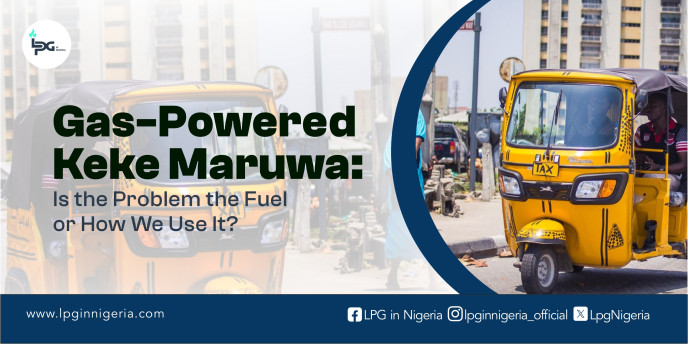
Gas-Powered Keke Maruwa: Is The Problem The Fuel Or How We Use It?

Last Christmas, while doing what most of us adults do during the festive season, moving around markets, shopping, and trying to beat traffic, I noticed something that stopped me in my tracks. A Keke Maruwa running on AutoGas (LPG).
Now, in Ikorodu, where I live, this isn’t exactly common. So, at first, I was impressed. It felt like a glimpse into the future—cleaner fuel, lower running costs, and some level of innovation. But that feeling didn’t last long. The gas cylinder was placed in the front seat of the tricycle. The driver was parked right beside a suya seller, while another trader nearby was burning waste. My excitement quickly turned into anxiety. The apprehension I felt was honestly outrageous.
I walked up to the rider and asked if he was aware of the safety risks. He shrugged. No concern. No explanation. Just indifference. Out of curiosity, I spoke to six other tricycle riders in the area. Every single one of them said the same thing: using gas is too risky. Another three admitted they simply didn’t have enough information to even form an opinion. Interestingly, the one rider actually using a gas-powered tricycle said he adopted it for one reason: it made economic sense.
That encounter stayed with me. So, I decided to ask a bigger question.
What Do People Really Think About CNG and AutoGas for Keke Maruwa?
I ran a poll across two WhatsApp channels, asking a simple question:
Do you think CNG or AutoGas (LPG) is safe for Nigerian tricycles (Keke Maruwa)?
The responses were eye-opening.
Out of 122 total responses:
A clear majority believe gas-powered tricycles can be safe, if properly converted and regulated
A significant number agree it can work, but worry that safety enforcement in Nigeria is weak
Only a small minority believe the technology is outright too risky
Very few respondents admitted they simply need more information
In simple terms, most people are not afraid of CNG or AutoGas. They are afraid of how we use it in Nigeria.
The Real Issue: It’s Not the Fuel
CNG and AutoGas are not experimental fuels. They are used safely in public transport systems across Asia, Europe, and parts of Africa. The technology itself is not the problem.
The real issues are:
Poor or non-existent conversion standards
Uncertified technicians and unsafe installations
Gas cylinders are placed in dangerous positions
No clear inspection culture
Weak enforcement and monitoring
When you see a gas cylinder in the front seat of a tricycle, parked next to open flames, fear is not irrational, it’s logical.
Why Some Riders Still Choose Gas
Despite these concerns, one thing is clear: economics is driving adoption.
For many tricycle riders, petrol has become unpredictable and expensive. Gas, on the other hand, is cheaper, cleaner, and more efficient in the long run. Some riders are not choosing CNG or LPG because they feel safe; they’re choosing it because they need to survive. And that should worry us. When people adopt new technology purely out of economic pressure, without safety education or regulation, accidents become a matter of when, not if.
What Needs to Change
If Nigeria is serious about gas-powered transport, especially for informal public transport like Keke Maruwa, then a few things must happen:
Clear national standards for tricycle conversion
Certified conversion centres and approved kits
Proper cylinder placement and vehicle design
Routine safety inspections
Strong public awareness and rider education
Without these, we risk turning a good energy transition idea into a public safety problem.
That Christmas encounter taught me something important. Nigerians are not resistant to change. We are cautious, and rightly so. The poll confirms it: people believe CNG and AutoGas can work for Keke Maruwa, but only if done properly. Until safety becomes non-negotiable, fear and resistance will remain.
So the question is no longer “Is gas safe for Keke Maruwa?”
The real question is: “Are we ready to use it responsibly?”
And right now, the answer is still uncertain.
Share on Social Media:
Are you setting up, or do you need LPG information? Get started with our LPG and CNG Webinars!
Do you need LPG Depot Prices and Mont Belvieu Prices Data Sheet (2019 till date)? Get Access here!
3 Comments.

You May Also Like



Adebukola
21 January 2026 - 08:05pmThis is very enlightening and insightful information for the Government to work on to aid employment and improve economic growth of the country.
Reply